
A noninvasive option when medication has not been enough.
Transcranial Magnetic Stimulation is an FDA-cleared treatment that uses focused magnetic pulses to stimulate areas of the brain involved in mood regulation — without medication, and without anesthesia.
What TMS actually does
TMS delivers focused magnetic pulses to specific regions of the brain associated with depression. It is performed in the office while you sit in a chair, awake. There is no sedation and no recovery period — most people return to their normal activities immediately afterward.
A regulated, established treatment for depression — not experimental.
Nothing is implanted and no surgery is involved.
You stay awake and alert throughout the session.
Watch: TMS explained
A short explainer that Dr. Abbas shares with patients who are weighing up TMS. It covers what Transcranial Magnetic Stimulation is, who it tends to help, and what a course of treatment involves.
Your TMS course, step by step
Candidacy review
An evaluation to confirm that TMS is an appropriate option for you, including a review of your diagnosis, treatment history and medical safety considerations.
Mapping
At the first treatment session, the coil position and stimulation settings are established individually for you before treatment begins.
The sessions
You sit in a chair, awake, while the device delivers pulses. Each session runs about 30 minutes, five days a week. Where it suits your situation we can also run an accelerated schedule, with more than one session in a day spaced about an hour apart, which compresses the same course into a shorter window.
Reassessment
Response is tracked through the course rather than judged at the end, so the plan can be adjusted while treatment is underway.
TMS is not right for everyone. Certain implanted metal or devices in or near the head, and some seizure-risk factors, need to be reviewed before treatment — which is exactly what the candidacy evaluation is for.
TMS is often considered for people who
- Have not had an adequate response to antidepressant medication
- Cannot tolerate medication side effects
- Are looking for an effective treatment that does not involve medication
- Have been told their depression is treatment-resistant
Two minutes, and a clearer question to bring in
Our short self-assessment walks through the situations where TMS is usually worth discussing. It is not a diagnosis — it is a way to arrive at your appointment with a sharper question.
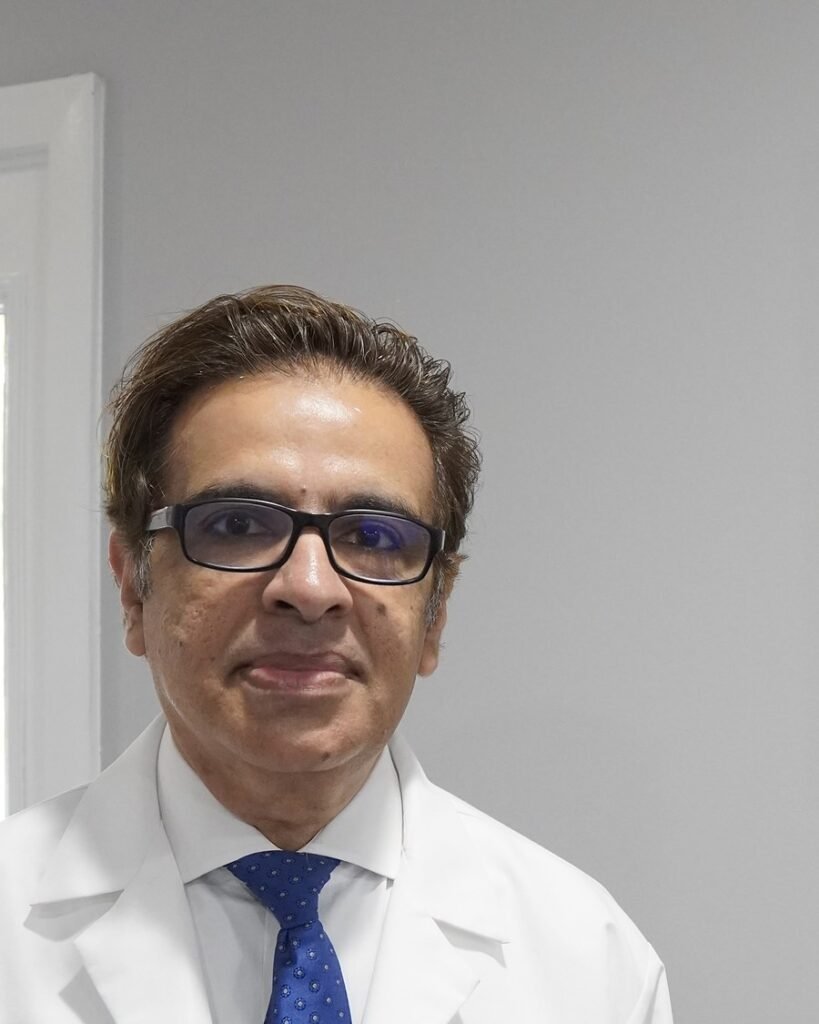
Directing hospital ECT and TMS services since 2017
Dr. Muhammad Ali Abbas is a triple board-certified interventional psychiatrist who has directed hospital ECT and TMS services since 2017, and served as the first Director of the Treatment Resistant Mood Clinic at Hope Tower, Jersey Shore University Medical Center. He currently directs the Neuromodulation Division at Raritan Bay Medical Center.
TMS questions, answered
Most people describe a tapping sensation on the scalp. Scalp discomfort and headache are the most commonly reported side effects, and they typically ease after the first several sessions.
No. TMS does not require anesthesia or sedation. You stay awake and alert for the whole session.
Because there is no sedation involved, people generally drive themselves to and from appointments and return to their usual activities right away.
Not necessarily. Many people continue their current medications during a course of TMS. Any changes are decided individually with Dr. Abbas.
Each session runs about 30 minutes, five days a week, over a course of several weeks. Response is tracked as treatment progresses rather than judged only at the end. Where appropriate, an accelerated schedule with more than one session per day, spaced about an hour apart, can compress the same course into a shorter period.
Most major insurance plans cover TMS. We verify your benefits and handle any prior authorization before treatment begins, so you know what your plan covers before you start. Call (732) 426-7030 and we can check your specific plan.
Treatment is delivered on Magstim TMS systems. Dr. Abbas directs the Neuromodulation Division at Raritan Bay Medical Center and has run hospital ECT and TMS services since 2017, so protocols here follow the same standards used in a hospital neuromodulation program.
You may also want to explore
Treatment-Resistant Depression
How a careful reassessment works when treatments have not helped.
Find out whether TMS is worth discussing.
A consultation is the way to get a real answer for your situation.